
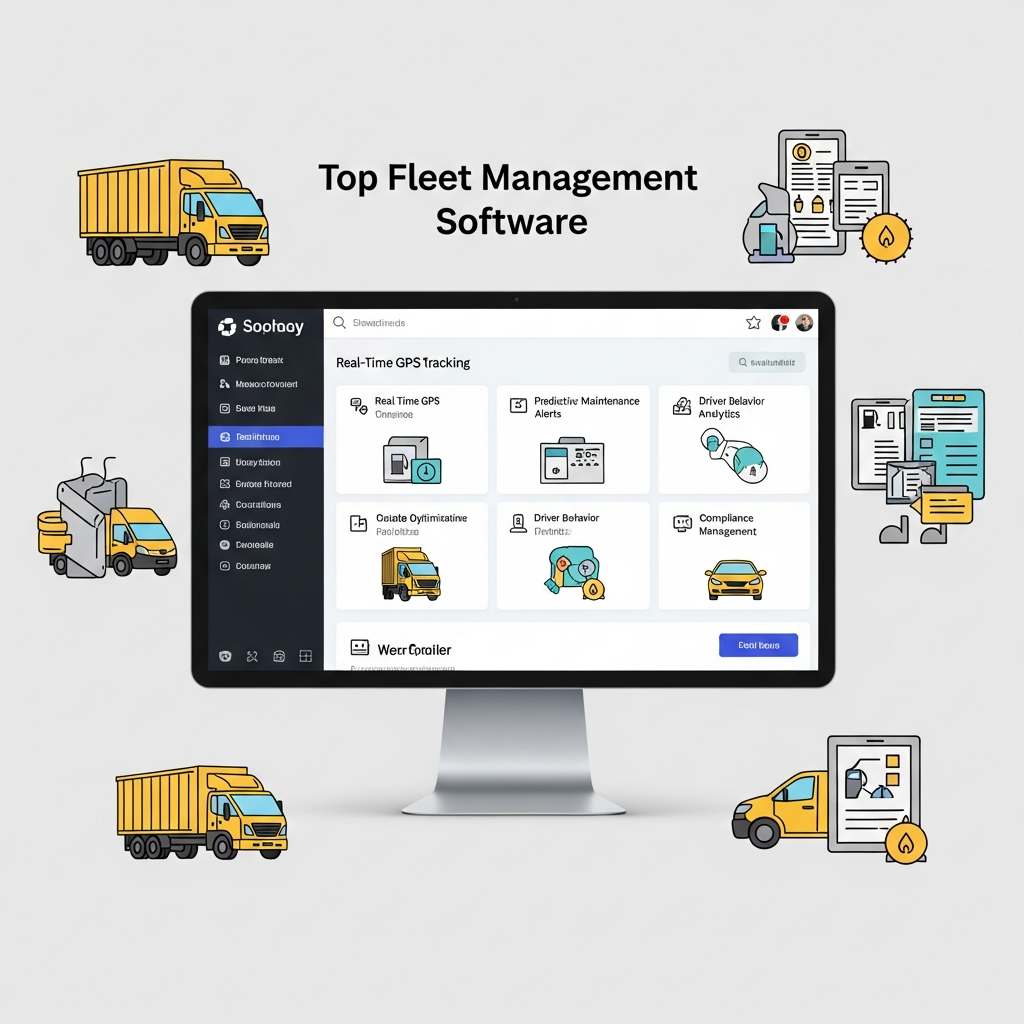
Top fleet management software helps businesses monitor vehicles, drivers, equipment, maintenance, fuel usage, safety events, routes, and compliance from one central platform. Instead of relying on phone calls, spreadsheets, paper inspection forms, and guesswork, fleet managers can see what is happening across the operation with much better clarity.
For any business that depends on cars, vans, trucks, trailers, field crews, construction equipment, delivery vehicles, or service fleets, visibility is money. When managers know where vehicles are, how they are being used, which drivers need coaching, and which assets need maintenance, they can make decisions before small problems turn into expensive ones.
A strong fleet management system usually combines GPS tracking, telematics hardware, driver behavior monitoring, maintenance reminders, fuel reports, route tools, inspection workflows, alerts, dashboards, and mobile apps. Many leading platforms also support dash cameras, electronic logging device tools, asset tracking, compliance reporting, and integrations with accounting, payroll, dispatch, CRM, or maintenance systems. 9 Powerful Benefits of Inventory Management Software Modules
That is why top fleet management software has become a serious business investment, not just a tracking tool. Samsara, for example, promotes real-time GPS fleet tracking, routing, ELD compliance, driver safety tools, AI dash cams, and equipment management as part of its connected operations platform. Geotab highlights GPS tracking, driver behavior management, advanced reporting, engine data, route optimization, and vehicle health features. Verizon Connect describes near real-time fleet visibility, driver behavior tracking, asset tracking, compliance support, and EV tracking across its fleet solutions. (Samsara)
In plain English, the right software gives fleet leaders a cleaner way to reduce chaos, improve accountability, and protect profit.
Why fleet management software matters
Fleet operations can become expensive very quickly. Fuel, repairs, insurance, labor, downtime, compliance, vehicle replacement, and missed appointments all add up. Without accurate data, managers may know costs are rising, but they may not know why.
Fleet management software brings daily operations into focus. GPS tracking can show where vehicles are and how routes are performing. Driver behavior tools can flag speeding, harsh braking, rapid acceleration, cornering, and long idle time. Maintenance modules can help teams schedule service before breakdowns disrupt the day. Reporting tools can show patterns that are hard to spot manually.
Safety is one of the biggest reasons companies invest in these systems. When drivers know performance is measured, risky habits often become easier to coach. Dash cams and driver scorecards can also help managers review incidents more fairly. Samsara and Verizon Connect both position driver safety and visibility as central parts of their fleet platforms, while Azuga emphasizes driver scoring, rewards, and gamification as part of its safety approach. (Samsara)
Maintenance is another major benefit. A vehicle that breaks down unexpectedly can delay deliveries, frustrate customers, and create overtime costs. Fleet systems can track mileage, engine hours, diagnostic trouble codes, service history, inspections, and upcoming preventive maintenance. Geotab’s fleet management software page lists engine data reporting, engine health, and vehicle tracking among its key capabilities, while Fleetio highlights asset management, fuel management, tire management, reports, expense tracking, and cost analysis. (Geotab)
Compliance also matters, especially for commercial transportation fleets. In the United States, the FMCSA says an electronic logging device synchronizes with a vehicle engine to automatically record driving time for hours-of-service records; the agency also states that hours of service rules define the maximum time commercial motor vehicle drivers may be on duty, including driving time and required rest periods. (FMCSA)
Customer service improves too. A dispatcher who can see vehicle location and estimated arrival times can update customers faster. Motive’s GPS fleet tracking page, for example, describes real-time and historical GPS data, live location sharing, and automatic ETAs as part of its tracking solution. (Motive)
At the end of the day, fleet software helps managers stop reacting blindly and start managing from evidence.
Best fleet management software options to compare
There is no single “best” fleet platform for every company. A plumbing business with 12 vans, a logistics carrier with 500 trucks, a construction firm with powered and non-powered assets, and a government fleet with strict reporting needs will not all need the same setup. The smartest approach is to compare platforms by use case.
| Software | Strong Fit | Notable Capabilities |
| Samsara | Fleets needing all-in-one telematics, safety, and connected operations | GPS tracking, routing, ELD, AI dash cams, equipment management |
| Geotab | Data-driven fleets needing analytics and flexibility | GPS tracking, engine data, driver behavior, reports, route optimization |
| Verizon Connect | Businesses wanting broad fleet, asset, compliance, and EV tracking | Near real-time visibility, driver behavior, asset tracking, compliance, EV monitoring |
| Motive | Trucking, logistics, and field operations focused on safety and productivity | GPS tracking, live ETAs, compliance, safety, reporting |
| Fleetio | Fleets focused heavily on maintenance, assets, fuel, and cost control | Asset management, fuel, tire tracking, driver assignments, reports, expense analysis |
| Azuga | Small to large fleets that want simple tracking and driver safety engagement | GPS tracking, geofencing, driver scores, rewards, alerts, diagnostics |
| Teletrac Navman | Mixed fleets needing visibility, compliance, job management, and analytics | Location features, ELD, analytics, job management, maintenance |
Samsara is often attractive for companies that want a connected platform covering vehicle tracking, AI dash cams, driver safety, compliance, equipment, and operational visibility. Its public product pages emphasize real-time GPS data, smart map overlays, live location sharing, geofencing, routing, ELD compliance, fuel, cameras, and equipment management. (Samsara)
Geotab is a strong option for fleets that care about data depth, reporting, vehicle diagnostics, and flexible configuration. Its fleet management page lists advanced reporting, driver behavior management, robust engine data reporting, GPS vehicle tracking, route optimization, and engine health. (Geotab)
Verizon Connect is worth comparing for organizations that want a broad fleet platform with vehicle tracking, asset tracking, compliance, dash cams, EV tracking, dashboards, reports, alerts, and marketplace integrations. Its pages describe near real-time location visibility, driver behavior monitoring, maintenance and fuel cost reduction, dispatch and routing improvements, and integrations with maintenance and fuel management partners. (Verizon Connect)
Motive is built around operations safety, productivity, and profitability. Its official pages describe an integrated platform for fleet operations, real-time GPS tracking, live location sharing, automatic ETAs, workflow automation, compliance, safety, and reporting. (Motive)
Fleetio stands out for businesses that want detailed maintenance and asset management rather than only live GPS tracking. Its feature list includes asset management, fuel management, tire management, VIN decoding, driver assignments, vehicle location history, fleet reports, expense tracking, and cost analysis. (Fleetio)
Azuga may appeal to companies that want easy GPS tracking plus driver engagement. Its site describes real-time vehicle tracking, asset protection, driver safety, geofencing, speed alerts, idling reports, diagnostics, driver history, driver scores, and rewards-based safety features. (Azuga)
Teletrac Navman is another serious option for fleets that need location visibility, ELD tools, analytics, job management, maintenance, workflow apps, video telematics, driver scorecards, DVIR systems, and mixed-fleet support. (Teletrac Navman)
Must-have features in a fleet platform
The best fleet management system should match your operational pain points. Still, there are several features most businesses should evaluate carefully before signing a contract.
GPS tracking is the foundation. It helps dispatchers see vehicle locations, review trip history, monitor job progress, and improve routing. A strong GPS module should include live maps, geofencing, location history, route replay, alerts, and mobile access.
Driver behavior monitoring is another must-have. Speeding, harsh braking, rapid acceleration, distracted driving, and excessive idling can affect safety, fuel use, maintenance costs, and insurance risk. Platforms such as Verizon Connect, Geotab, Samsara, Azuga, and Teletrac Navman all publicly highlight driver behavior, safety, scorecards, or coaching-related capabilities. (Verizon Connect)
Maintenance management is essential for controlling downtime. Look for service reminders, inspection records, repair history, diagnostic alerts, work orders, parts tracking, and cost reports. Fleetio’s feature set is especially maintenance and cost focused, while Geotab and Verizon Connect also highlight vehicle health, maintenance, and cost reduction features. (Fleetio)
Fuel management can reveal hidden waste. Long idling, inefficient routes, unauthorized use, aggressive driving, and poor maintenance can all increase fuel costs. Fleetio describes fuel management software as a way to track fuel economy and fuel reports, and Verizon Connect says combining GPS tracking and fuel transaction data can help fleets identify patterns for improving efficiency and preventing misuse. (Fleetio)
Compliance tools matter for regulated fleets. Depending on the country, state, industry, and vehicle type, you may need electronic logs, DVIR workflows, hours-of-service tools, inspection records, or audit-ready reports. FMCSA states that ELDs automatically record driving time and other hours-of-service record details, while Teletrac Navman and Verizon Connect both list ELD or compliance management among their fleet software capabilities. (FMCSA)
Dash cameras are increasingly important for safety programs. They can support driver coaching, incident review, claims handling, and risk reduction. Samsara promotes AI dash cams and in-cab alerts, while Verizon Connect describes HD video, AI, and driver data working together to coach drivers and mitigate risk. (Samsara)
Reports and dashboards turn raw fleet data into decisions. A good system should show trends by vehicle, driver, team, region, route, job type, fuel usage, maintenance cost, safety event, and asset utilization. Verizon Connect describes customizable dashboards and near real-time fleet analytics, while Geotab lists advanced reporting as a key software feature. (Verizon)
How to choose the right system
Choosing top fleet management software starts with a clear understanding of your fleet’s daily problems. Do not begin with a brand name. Begin with your pain points.
A small service business may mainly need location tracking, route visibility, driver accountability, and simple maintenance reminders. A trucking company may need ELD compliance, driver logs, fuel reporting, dash cams, trailer tracking, and customer ETAs. A construction business may need powered asset tracking, non-powered asset tracking, equipment utilization, geofencing, and job-site visibility. A delivery company may need dispatch tools, route optimization, proof of service, and strong mobile access.
Fleet size matters too. Some systems are built to be simple for smaller fleets, while others shine in complex enterprise environments. Azuga states that its fleet platform is used by businesses ranging from small fleets to enterprise fleets, while Geotab describes its platform as supporting optimized fleet operations with GPS tracking and management tools. (Azuga)
Integration is another big factor. Your fleet software may need to connect with accounting, payroll, fuel cards, maintenance systems, route planning tools, ERPs, CRMs, insurance programs, or customer service platforms. Samsara highlights API activity and an open platform, while Verizon Connect describes approved software integration partners that extend fleet functionality. (Samsara)
Ease of use is just as important as features. If dispatchers, drivers, mechanics, and managers do not actually use the platform, the investment will fall flat. Look for clean dashboards, reliable mobile apps, simple alerts, driver-friendly inspection workflows, and easy reporting.
Pricing should be reviewed carefully. Fleet software may include monthly subscription fees, hardware costs, installation fees, contract terms, camera add-ons, asset trackers, compliance modules, and support packages. Ask for a full cost breakdown before committing.
Data privacy and access control also matter. Fleet systems collect sensitive location, driver, vehicle, and operational data. Make sure the platform supports user permissions, role-based access, data retention controls, and clear policies for how driver data is used.
Finally, test the support experience. Fleet systems are operational tools, not decorative software. When a device stops reporting, a driver cannot log in, or a compliance report is needed fast, support quality matters.

Points about Top Fleet Management Software
Addition
- Moreover, top fleet management software helps businesses monitor vehicles in real time.
- In addition, it allows managers to track driver performance and fuel usage more efficiently.
- Furthermore, top fleet management software supports better route planning and delivery scheduling.
- Also, these systems can reduce paperwork by automating daily fleet operations.
- Besides that, fleet management tools improve communication between drivers and office teams.
Comparison
- Similarly, many top fleet management software solutions offer GPS tracking and maintenance alerts.
- Likewise, these platforms help companies improve safety and reduce operating costs.
- In the same way, fleet software gives managers better control over vehicle usage.
- Compared to manual tracking, top fleet management software provides faster and more accurate data.
- Just like inventory software, fleet management software helps businesses stay organized and efficient.
Cause and Effect
- As a result, companies can reduce delays and improve customer satisfaction.
- Therefore, choosing the right fleet management software can directly affect business productivity.
- Consequently, businesses can lower fuel costs and prevent unnecessary vehicle downtime.
- Because of this, top fleet management software has become essential for modern transport operations.
- For this reason, many companies invest in fleet software to improve visibility and control.
Contrast
- However, not every fleet management system offers the same level of reporting and automation.
- On the other hand, some software focuses more on driver safety than route optimization.
- Nevertheless, top fleet management software usually combines tracking, maintenance, and analytics in one platform.
- Although manual fleet tracking may work for small teams, it becomes difficult as operations grow.
- Despite the initial cost, fleet management software can save money in the long run.
Conclusion
- Overall, top fleet management software gives businesses a smarter way to manage vehicles and drivers.
- In conclusion, these tools help companies improve efficiency, safety, and cost control.
- Ultimately, fleet management software supports better decisions through real-time fleet data.
- To sum up, the right fleet software can make daily operations more organized and reliable.
- In the long run, top fleet management software can help businesses build a stronger and more profitable fleet operation.
Implementation best practices
Even the best platform can disappoint if implementation is sloppy. Good results come from good rollout habits.
Start with a pilot. Choose a small group of vehicles, drivers, and managers. Test the hardware, dashboards, alerts, mobile apps, inspection workflows, and reports. Use the pilot to find problems before rolling the system out across the whole fleet.
Explain the “why” to drivers. If the software is introduced as a surveillance tool, drivers may resist it. If it is presented as a safety, fairness, maintenance, routing, and customer service tool, adoption usually improves. Driver scorecards and dash cams should be tied to coaching, not just punishment.
Set clear rules for alerts. Too many alerts create noise. Too few alerts miss important events. Begin with the most useful alerts, such as speeding, harsh braking, long idling, unauthorized vehicle use, geofence entry or exit, overdue maintenance, diagnostic warnings, and compliance issues.
Clean your vehicle and driver data before launch. Duplicate vehicle names, old driver records, missing VINs, outdated asset lists, and inconsistent groups will make reports messy. A clean setup creates cleaner insights.
Train every user by role. Dispatchers need different training than drivers. Mechanics need different training than executives. Managers need to understand reports, trends, and coaching workflows. Drivers need to understand mobile apps, inspection forms, logging tools, and privacy expectations.
Review reports regularly. Fleet software becomes powerful when leaders actually use the data. Hold monthly reviews for fuel, safety, maintenance, utilization, route performance, downtime, and operating cost. Look for patterns, not just one-off mistakes.
Keep improving. As your fleet grows, your settings, permissions, routes, geofences, reports, and workflows should evolve. A platform that is configured once and ignored will not deliver its full value.
Conclusion top fleet management software
Fleet management is no longer just about knowing where vehicles are. It is about running a safer, leaner, more accountable operation. The right platform can help reduce waste, improve maintenance planning, coach drivers, protect assets, support compliance, and give customers better updates.
The smartest choice is not always the most famous product. It is the system that fits your fleet size, industry, budget, compliance needs, driver workflows, maintenance process, and reporting goals. Compare Samsara, Geotab, Verizon Connect, Motive, Fleetio, Azuga, Teletrac Navman, and other options through that lens.
Before making a decision, write down your top five fleet problems. Maybe fuel costs are rising. Maybe maintenance is reactive. Drivers are hard to dispatch. Maybe customers keep asking for ETAs. Maybe compliance paperwork is stressful. Once the problems are clear, the right software becomes much easier to identify.
Used well, top fleet management software is more than a tracking system. It is a practical command center for vehicles, people, assets, safety, cost control, and growth.


